
In a world that often feels increasingly divided, polarized, and quick to judge, one spiritual teaching offers a radical alternative: what if no one was excluded from forgiveness?
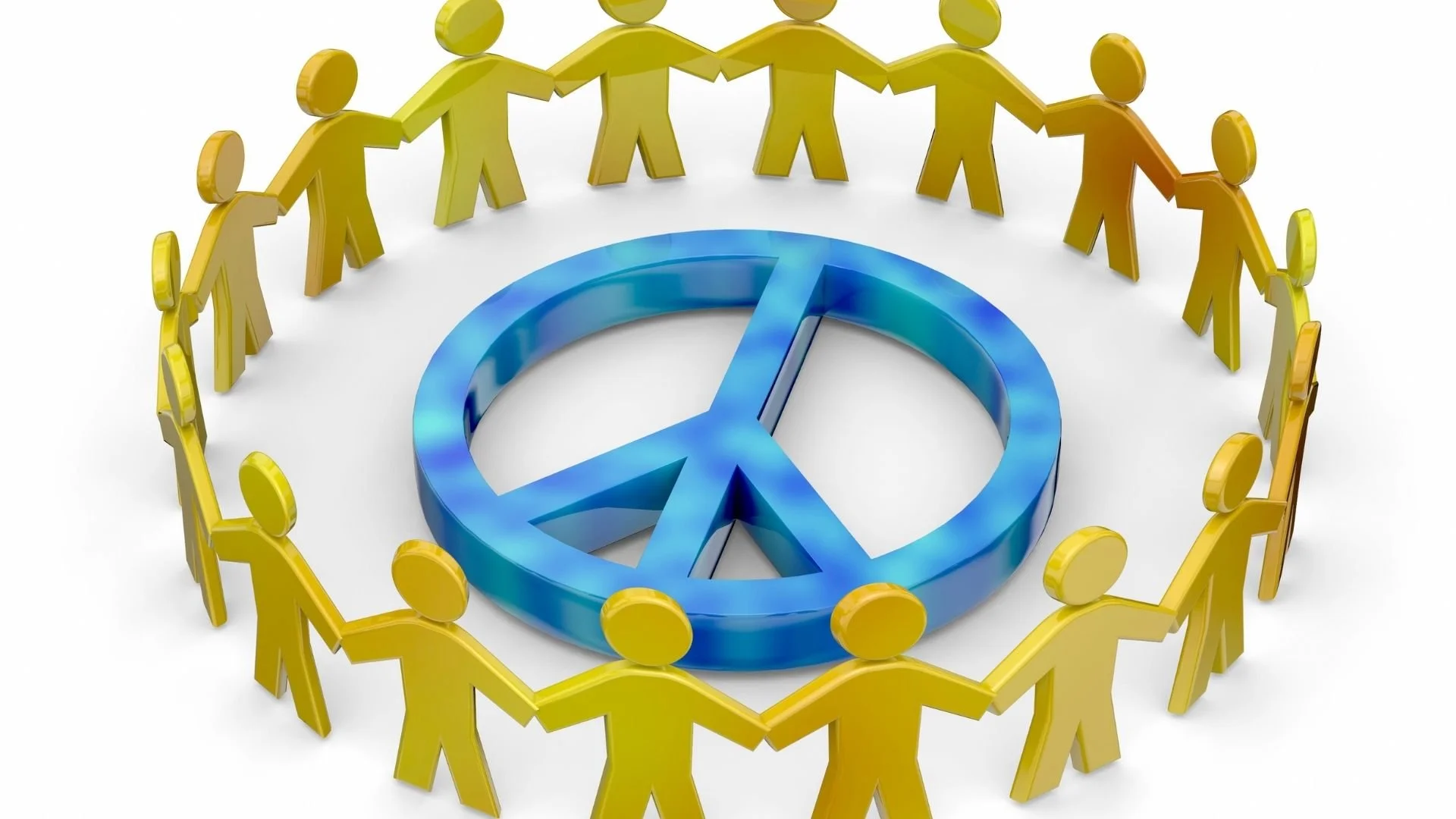
This idea lies at the heart of a powerful section of A Course in Miracles known as The Circle of Atonement (Chapter 14, Section 5). The teaching challenges us to reconsider how we view ourselves, other people, and even those we find difficult—or seemingly impossible—to forgive.
At first glance, the concept may seem unrealistic. Yet beneath it lies a profound invitation to peace, healing, and spiritual freedom.
The Foundation: Reconnecting With the Divine
The lesson begins with a simple but transformative premise: the most real part of us is the part that remains connected to God.
The text states:
“The only part of your mind that has reality is the part that links you still with God.”
According to A Course in Miracles, our primary task is not to fix the world, win arguments, or control circumstances. Instead, it is to strengthen our awareness of our connection with the Divine.
This teaching echoes wisdom found in many spiritual traditions. Whether we call it God, Spirit, Source, Divine Love, or Higher Consciousness, the message remains the same: lasting peace begins within.
The course encourages us to place this connection above the endless distractions, fears, conflicts, and dramas that dominate daily life. Family relationships, careers, politics, finances, and social status all have their place, but they are secondary to the inner awareness of divine love.
This does not mean we abandon responsibility or disengage from the world. Rather, we establish a different order of priorities. Connection first and everything else second. When we reconnect with the Divine, we begin to remember something essential: our worth is not earned. It is inherent.
The Radical Meaning of Atonement
The word “atonement” often carries religious associations involving sacrifice, guilt, punishment, and redemption. However, A Course in Miracles offers a very different interpretation. In the course, atonement is fundamentally about the restoration of innocence. It teaches that guilt is not our true identity. Beneath every mistake, fear, failure, or harmful action lies a deeper spiritual truth: we remain loved by God.
One of the most controversial teachings in the course concerns the crucifixion and resurrection of Jesus.
The text explicitly states:
“The crucifixion had no part in the Atonement. Only the resurrection became my part in it.”
This perspective differs significantly from many traditional Christian interpretations that emphasize Christ’s sacrificial death as the central mechanism of salvation. Instead, A Course in Miracles places the emphasis on the resurrection as the ultimate demonstration that love is stronger than fear, life is stronger than death, and innocence is stronger than guilt. Whether or not one agrees with this theology, the underlying spiritual principle remains compelling: our healing comes not through punishment, but through remembering who we truly are.
Entering the Circle of Atonement
Perhaps the most powerful image in this section is the idea of a “circle of atonement.” Jesus is depicted as standing within a circle of peace, inviting all people to enter.
The invitation is simple:
“Come gladly to the holy circle and look out in peace on all who think they are outside of the circle of Atonement.”
Notice the emphasis here. The problem is not that people are actually outside the circle. The problem is that they think they are.
Many of us spend years believing we are separated from God, from love, from worthiness, or from peace. Others may believe the same thing about themselves.
The course suggests that healing occurs when we stop accepting this illusion of separation. More importantly, it challenges us not only to accept our own innocence but also to extend that same vision to others, and this is where the teaching becomes difficult.
The People We Want to Cancel
Most of us have people we mentally exclude from our circle. Perhaps it is someone who betrayed us. A family member who wounded us. A public figure whose actions anger us. A coworker who continually creates problems. An ex-partner, a political opponent, or someone who represents everything we disagree with.
We may not literally “cancel” them, but internally we often write them off. We create categories of people who are acceptable and people who are not. The Circle of Atonement asks us to examine that tendency.
It does not require us to approve harmful behavior. It does not ask us to ignore injustice. It does not suggest we place ourselves in unsafe situations. Instead, it asks a deeper question:
Can we recognize the divine worth of a person without endorsing their actions?
This distinction is critical.
Forgiveness is not the same as approval.
Compassion is not the same as agreement.
Love is not the same as permission.
Yet many of us struggle to separate these concepts.
The Ultimate Test of Forgiveness
Whenever discussions of universal forgiveness arise, someone inevitably raises an extreme example. What about history’s greatest villains? What about those responsible for atrocities? What about people who have caused unimaginable suffering?
These questions are not theoretical. They reflect real pain. The Circle of Atonement does not deny the horror of harmful actions. Nor does it excuse them. Rather, it asks us to distinguish between the eternal spiritual identity of a person and the destructive actions generated by fear, ego, ignorance, or hatred. This is not an easy teaching.
For many people, it may take years—or a lifetime—to wrestle with it. But the course suggests that if anyone is permanently excluded from our forgiveness, a part of our own peace remains trapped outside the circle as well. In other words, our grievances bind us to the very suffering we wish to escape.
Why This Matters Today
This lesson feels especially relevant in today’s cultural climate. We live in an era of intense polarization. Political divisions continue to deepen. Social media often rewards outrage over understanding. Public figures are simultaneously idolized and demonized. Communities fracture over ideology, identity, and belief systems.
The headlines themselves illustrate this dynamic.
Whether discussing political controversies, public disputes, leadership decisions, or cultural debates, people increasingly find themselves pressured to choose sides. Yet the Circle of Atonement offers a different approach. It invites us to hold our convictions while refusing to dehumanize others. It encourages us to bring even the most controversial issues into a space of compassion. This does not weaken our values; it strengthens them.
True spiritual maturity is not demonstrated by how we treat people we agree with. It is revealed by how we regard those we struggle to understand.
The Paradox of Specialness
Another theme that emerges from this teaching concerns specialness. Many of us spend our lives trying to prove that we are exceptional, unique, or somehow more valuable than others. Yet the course presents a paradox. We are all special. And because we are all special, none of us is superior. Each person has a unique role to play. Each person contributes something irreplaceable.
Like organs within a body, every part serves a function. The eye cannot dismiss the hand. The heart cannot dismiss the lungs. Likewise, no individual is more beloved by God than another.
We are equally cherished. Equally valuable. Equally worthy. Recognizing this truth softens the ego’s constant need for comparison and competition.
Forgiveness as an Inner Practice
One of the most misunderstood aspects of forgiveness is the belief that it is primarily about the other person. The course suggests otherwise: Forgiveness is ultimately about releasing the inner patterns that keep us trapped in pain.
Several lessons from A Course in Miracles reinforce this theme:
“I can escape from the world I see by giving up attack thoughts.”
“God is the Love in which I forgive.”
“Forgiveness is my function as the light of the world.”
“Let miracles replace all grievances.”
“Forgiveness is the key to happiness.”
Notice the common thread. Forgiveness is not weakness. It is liberation. When we forgive, we are not declaring that wrongdoing never occurred. We are choosing not to allow resentment to continue occupying space within our minds. That choice benefits us as much as anyone else.
Expanding Our Circle
Imagine drawing a circle. Inside that circle, place the people you love. Now expand it. Include those who challenge you. Expand it again. Include people who hold different political beliefs. Expand it further. Include people whose life experiences differ dramatically from your own. Continue expanding. Eventually, the circle becomes large enough to contain all humanity.
This is the vision presented in the Circle of Atonement. Not because everyone behaves perfectly. Not because everyone agrees. Not because justice no longer matters. But because divine love refuses to create permanent outsiders.
A Call to Action
This week, consider creating your own Circle of Atonement exercise:
Take a piece of paper and draw a large circle. Inside it, write the names of people, groups, institutions, or communities you naturally embrace. Then begin expanding the circle. Add the people you struggle with. Add the people you avoid. Add those who trigger frustration, disappointment, anger, or fear. You do not need to approve of their actions. You do not need to reconcile with everyone. You do not need to abandon healthy boundaries. Simply practice holding them within the possibility of grace. As you do, notice what changes within you.
The Circle of Atonement is not ultimately about changing other people. It is about freeing ourselves from the burden of separation. When we remember our own innocence, we become more capable of recognizing it in others. And when we recognize it in others, we take one more step toward the peace we have been seeking all along.
The invitation is simple: Enter the circle. Stay in the circle. And leave no one outside.


